
prepared by Dr Saeed Hassan
Inguinal hernias, characterized by the protrusion of tissue through the abdominal wall, can be a painful and debilitating condition affecting millions worldwide. Traditional open surgery has long been the standard treatment, but advancements in medical technology have introduced a less invasive option: Laparoscopic Inguinal Hernia Repair, specifically the Transabdominal Preperitoneal (TAPP) approach. Let’s delve into what TAPP entails and why it’s gaining momentum in the medical community.
What is Laparoscopic Inguinal Hernia Repair (TAPP)?
TAPP involves making small incisions in the abdominal wall through which a laparoscope (a thin, flexible tube with a camera) and specialized surgical instruments are inserted. The surgeon then navigates through the layers of tissue, reaching the hernia site, and repairs it using mesh reinforcement.
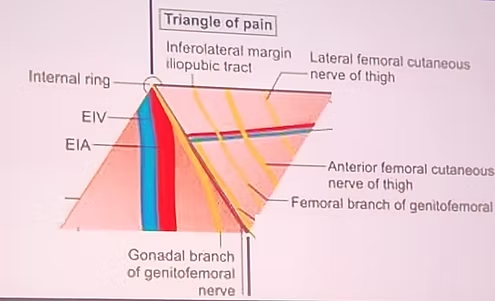
Benefits of TAPP:
1. Minimal Invasiveness: Compared to traditional open surgery, TAPP is minimally invasive, resulting in smaller incisions, less tissue trauma, and reduced postoperative pain.
2. Faster Recovery: Patients undergoing TAPP typically experience shorter hospital stays and quicker recovery times compared to open surgery, allowing them to return to normal activities sooner.
3. Lower Risk of Complications: Studies have shown that TAPP is associated with lower rates of surgical site infections, wound complications, and chronic pain compared to open surgery, leading to improved patient outcomes.
4. Improved Cosmesis: The smaller incisions used in TAPP result in less visible scarring, providing better cosmetic outcomes and increased patient satisfaction.
5. Effective for Bilateral Hernias: TAPP is particularly advantageous for patients with bilateral inguinal hernias, as it allows the surgeon to repair both hernias through the same small incisions, reducing overall surgical trauma.
Conclusion:
Laparoscopic Inguinal Hernia Repair using the TAPP approach offers numerous advantages over traditional open surgery, including minimal invasiveness, faster recovery, lower risk of complications, improved cosmesis, and effectiveness for bilateral hernias. As surgeons continue to refine their techniques and technology advances further, TAPP is poised to become the preferred choice for inguinal hernia repair, providing patients with better outcomes and a higher quality of life.
References:
1. Memon MA, Cooper NJ, Memon B, Memon MI, Abrams KR. Meta-analysis of randomized clinical trials comparing open and laparoscopic inguinal hernia repair. Br J Surg. 2003;90(12):1479-1492. doi:10.1002/bjs.4374
2. Köckerling F, Bittner R, Jacob DA, et al. Do we need antibiotic prophylaxis in endoscopic inguinal hernia repair? Results of the Herniamed Registry. Surg Endosc. 2017;31(7):2989-2997. doi:10.1007/s00464-016-5310-y
3. Alkatout I, Schollmeyer T, Mavrova R, Momm F, Mettler L. Mesh Fixation Alternatives in Laparoscopic Inguinal Hernia Repair. Hindawi Publishing Corporation. Volume 2014, Article ID 675385. doi:10.1155/2014/675385
4. Bittner R, Schmedt CG, Schwarz J, Kraft K, Leibl BJ. Laparoscopic transperitoneal procedure for routine repair of groin hernia. Br J Surg. 2002;89(8):1062-1066. doi:10.1046/j.1365-2168.2002.02187.x
5. Sharma H, Jha PK, Shekhawat NS, Memon B, Memon MA. Repair of inguinal hernia: a comparison of open and laparoscopic techniques. Saudi J Gastroenterol. 2010;16(1):18-23. doi:10.4103/1319-3767.58759